The Ultimate Solar Guide 2024

Welcome to the Ultimate Guide to Solar Panel Installation, brought to you by GB Energy Group. In this comprehensive guide, we'll take you through every step of the solar panel installation process, from design considerations to aftercare maintenance. Whether you're a homeowner, business owner, or property developer, this guide will provide you with the knowledge you need to make informed decisions about harnessing the power of solar energy.

Are solar panels worth it?

When it comes to deciding whether solar panels are a smart investment for your UK home, the answer is a resounding yes! Let's break it down.

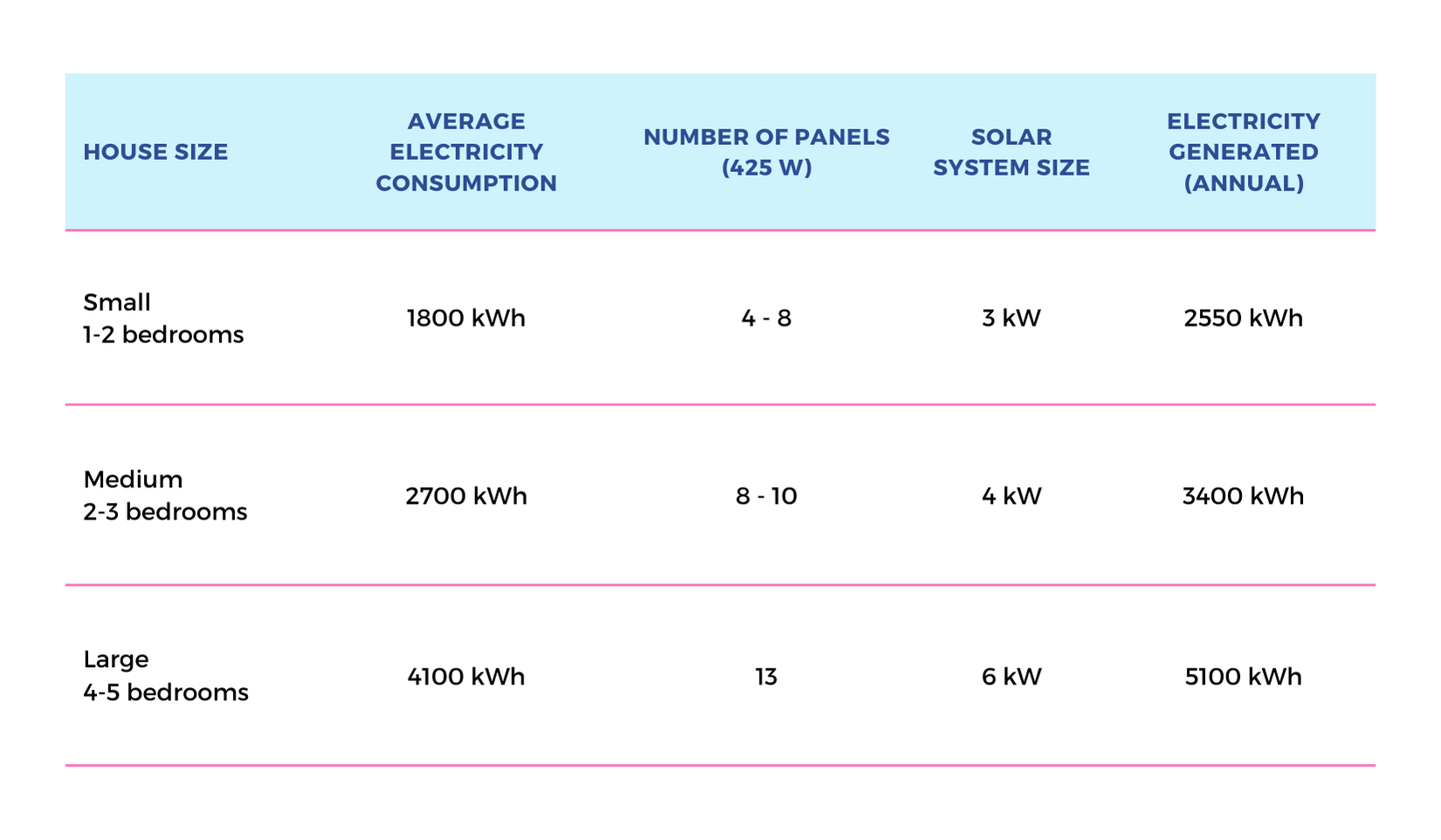
Imagine your typical 3-bedroom UK home equipped with a 4kW solar panel system. It could potentially cover around 117% of its electricity needs in optimal conditions. That's not just good for the environment – it's also great news for your wallet, with potential annual savings of around £770 on electricity bills alone.

And here's the cherry on top: By selling any surplus electricity back to the grid, you could significantly shorten the payback period to just about 12 years.

These 4kW systems are super popular for a reason – around 80% of households swear by them. With an output of 3,400 kWh per year and a cost ranging from £9,000 to £10,000, they're designed to outperform the average annual household electricity consumption, which is about 2,700 kWh.

Over their 25 to 30-year lifespan, solar panels can bring in some serious savings. Sure, there's an initial investment, but with a payback period as short as 11 to 15 years, you could potentially save a whopping £23,325 over 25 years.

But wait, there's more! Solar panels keep on giving all year round, with peak output during those sunny summer months. Plus, thanks to cool schemes like the Smart Export Guarantee (SEG) from the UK Government, you can earn some extra cash by selling any excess solar energy back to the grid.

In the end, while the upfront cost might seem like a lot, the combination of eco-friendly benefits and financial incentives often makes solar panels a no-brainer investment for savvy homeowners. So go ahead, soak up the sun – and the savings!

How much do solar panels cost?

Well, it depends on a few factors, but on average, you're looking at anywhere between £5,000 to £13,000 for a domestic solar panel system. The actual cost varies based on the number of panels you need, which, in turn, depends on your household's energy consumption.

Here's the lowdown: Generally, the pricier the system, the more electricity it can generate – meaning bigger savings for you. Take a look at this handy table for a breakdown of costs and potential savings:
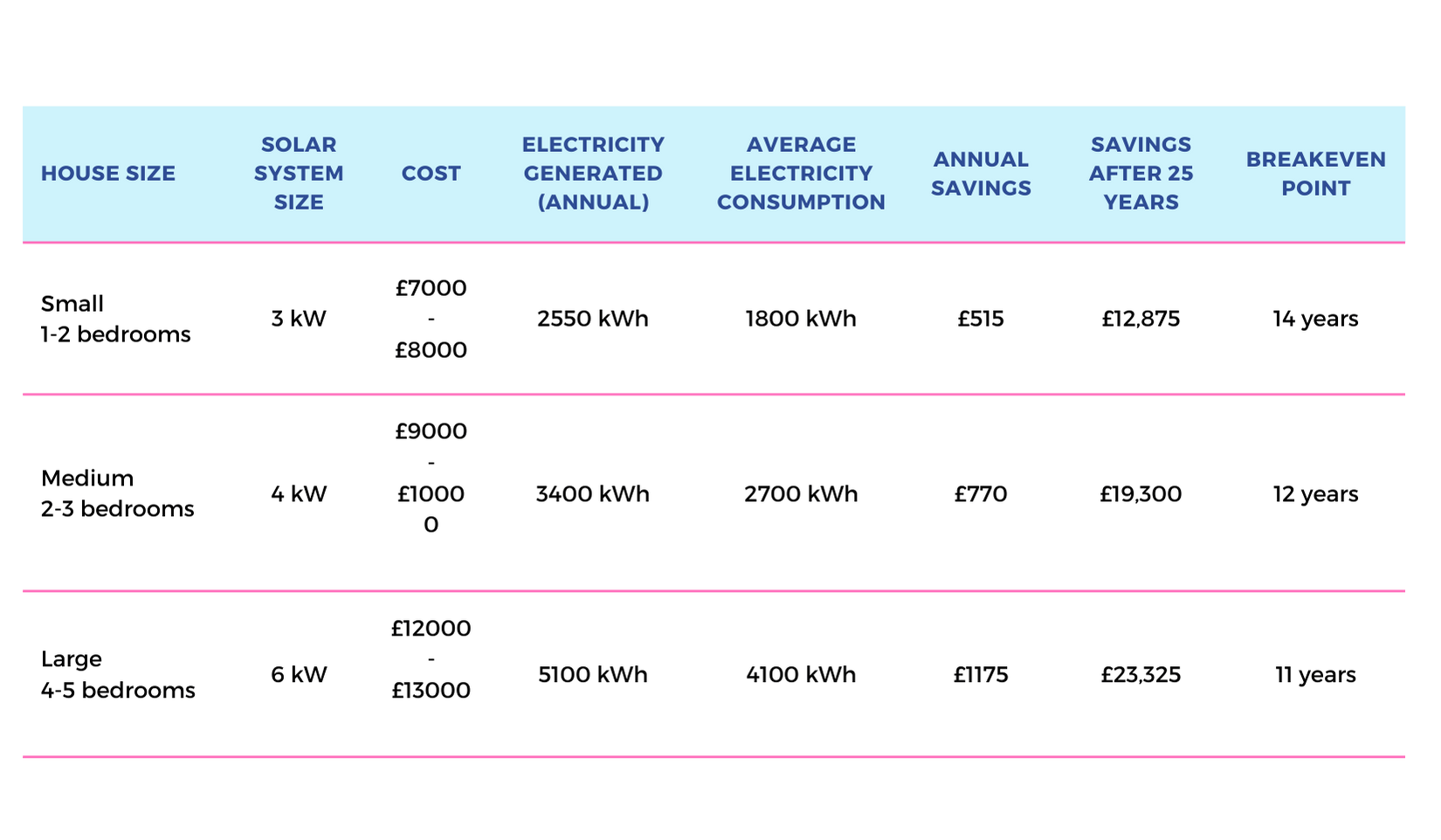
Now, let's decode this table: It's based on the assumption that a household uses the annual national average of 2,700kWh (according to Ofgem). We're also assuming that as much of your electricity usage as possible is covered by solar panels.

Plus, we're estimating that a 1kW system generates around 850kWh of electricity per year. And we're using Octopus Energy's SEG tariff of 5.5p/kWh (as of January 2024) for those sweet SEG payments.

Now, remember, these are just ballpark figures. The actual cost and savings can vary depending on factors like the size, type, and quality of your solar panel system, as well as export tariffs.

Oh, and if you're thinking about commercial solar panels, the sizing – and the cost – will be a whole different ball game. But hey, that's a story for another day!
What grants are available for solar installations?

There are indeed various financial schemes and grants that can help you earn money on your solar panels, depending on where you live. Let's break it down:

Solar Panel Grants in the UK

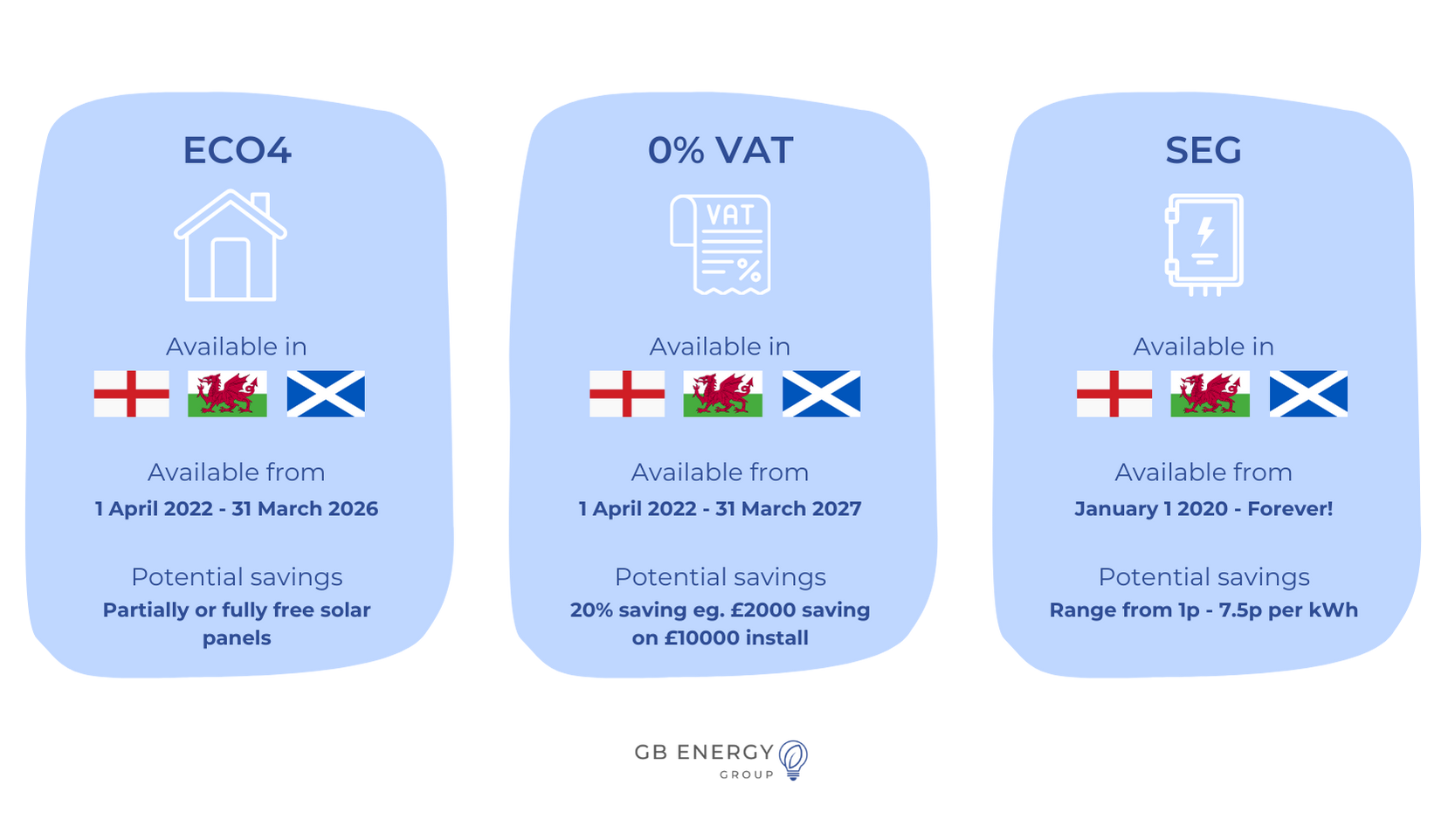
0% VAT
: Available in England, Scotland, and Wales from April 1, 2022, to March 31, 2027. This scheme offers potential savings of £1,300+ on installation & energy bills.

Smart Export Guarantee (SEG): Available in England, Scotland, and Wales since January 1, 2020. This ongoing scheme allows you to earn between 1 – 7.5p per kWh by selling surplus energy back to the grid.

ECO4 (Energy Company Obligation Scheme): Available in England, Scotland, and Wales from April 1, 2022, to March 31, 2026. This scheme offers partially or fully free solar panels.

Home Upgrade Grant (HUG2): Available in England from April 1, 2023, to March 31, 2025. Under this scheme, households could receive up to £10,000.

Home Energy Scotland Programme: Available in Scotland since 2008. This ongoing scheme offers households potential savings of up to £6,000.

Warmer Homes Scotland: Available in Scotland since September 2015. This ongoing scheme offers households potential savings of up to £9,000.

It's worth noting that not all grants and financial schemes are available across the entire UK. However, we've listed the top 6 grants for you to consider. Of particular interest are the 0% VAT, ECO4, and the Smart Export Guarantee (SEG).

Since January 1, 2020, the Smart Export Guarantee has effectively replaced the Feed-in Tariff (FIT). With the SEG, UK homeowners can earn money by exporting surplus energy back to the grid. Tariffs vary among energy suppliers, but a good export tariff rate is around 4-6p/kWh, with some going as high as 24p/kWh.

Another option for solar panel funding is the VAT reduction on energy-saving products, such as PV panels. Until March 2027, you'll pay 0% VAT to help transition to renewable energy, potentially saving you up to £1,000. The ECO4 Scheme is also worth considering, especially if you're eligible. Low-income households can replace inefficient heating systems with environmentally friendly systems like solar PV panels. Remember, your solar panel installer should automatically apply the VAT reduction if you qualify.

Are solar panels right for you and your home?

Wondering if solar panels are the right fit for your home? Let's explore.

Solar panels are a popular choice and are installed in nearly 12,000 homes across the UK each month, according to national government statistics. But before you jump in, here are a few things to consider:

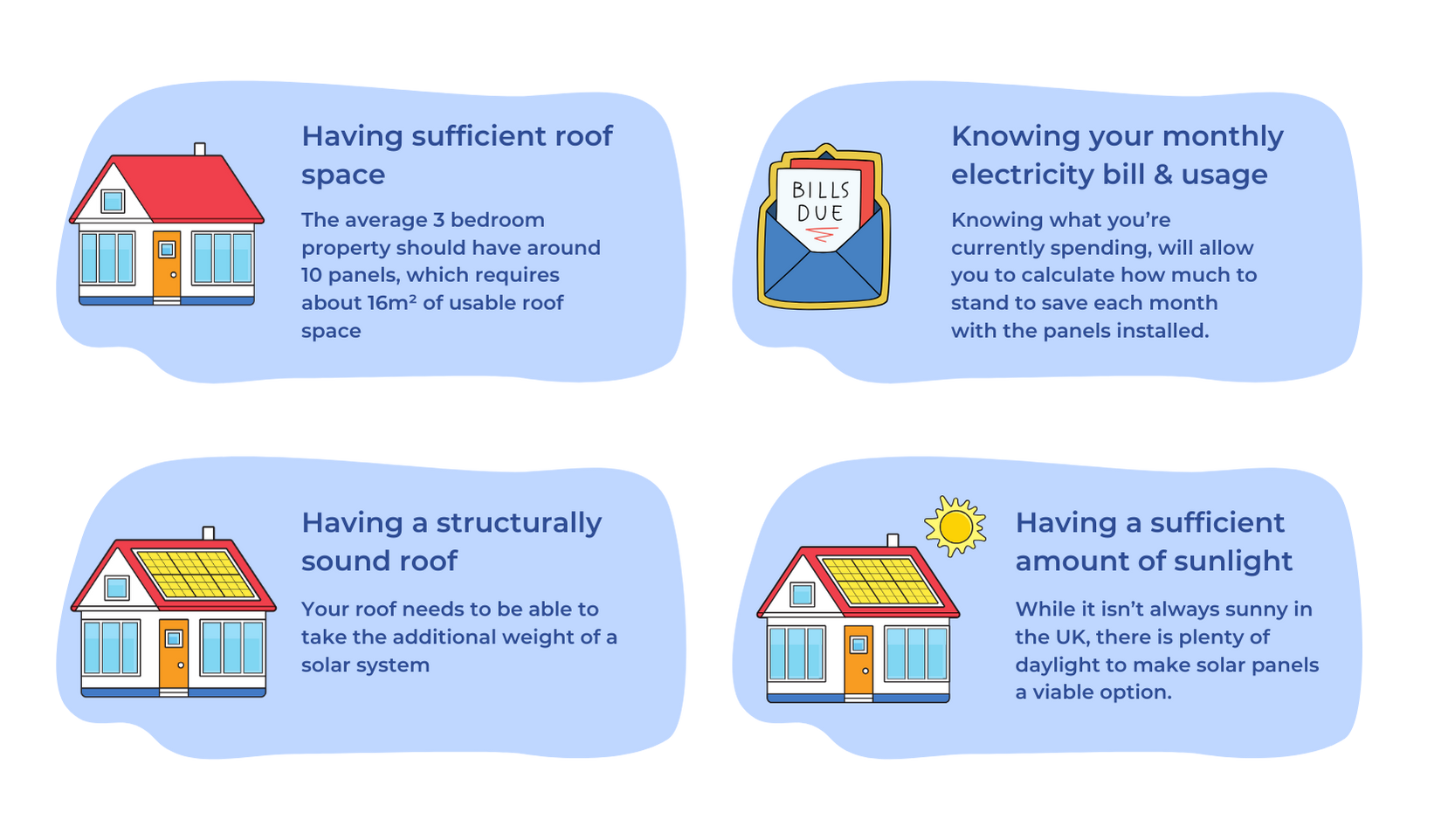
The 4 Hard Requirements for Solar Panel Installation

Sufficient Roof Space
: Installing solar panels requires ample roof space. For instance, a 4kW system of 350W solar panels typically needs about 10 panels, covering around 16 m² of roof space. Ensure there's at least 30 cm of space around the panels for optimal performance. Choosing a smaller size or fewer panels may compromise electricity generation and overall benefits.

Structurally Sound Roof: Your roof should be able to support the weight of a solar panel system. Most modern roofing materials are suitable, except for slate and wooden roofs, which may be too brittle. If your roof is old or showing signs of damage, it's essential to repair or replace it before installing solar panels.

Monthly Electricity Consumption: Understanding your monthly electricity consumption is crucial for determining the appropriate solar panel system size and the number of panels needed. Monitoring your electricity bills helps make an informed decision, preventing over or under-investment in solar panels.

Sufficient Sunlight: Despite the UK's reputation for cloudy weather, solar panels can still be effective. However, it's essential to consider factors like peak sun hours, regional variations, and other relevant aspects to gauge the suitability of solar panels for your home.By ticking off these hard requirements, you'll be better equipped to determine if solar panels are the right choice for your home. Ready to explore further? Let's dive in!

How do solar systems work?

Let's delve deeper into how solar panels work, focusing specifically on photovoltaic panels that generate electricity.

Understanding Solar Photovoltaic Panels

Photovoltaic (PV) panels are widely used across the UK, with over a million systems deployed. These panels are designed to directly convert sunlight into electricity through a fascinating process:

Sunlight Absorption: Solar cells within the PV panels, typically made of semiconductors like silicon, absorb sunlight.

Electricity Generation: When sunlight hits the solar cells, it excites electrons within the semiconductor material. This excitement creates an electric current, generating electricity.

Panel Assembly: Multiple solar cells are connected and packed together within a frame to form a solar panel. These panels are then connected to form a solar array.

Electrical Circuit: Electrical conductors are attached to the positive and negative terminals of the solar cells, creating an electrical circuit. This circuit captures the generated electrons as an electric current.

Power Output: The combination of current and voltage produced by the solar cells determines the power output of the panel. This is how solar panels effectively convert sunlight into usable electricity.

By harnessing the power of sunlight, photovoltaic panels offer a sustainable and renewable source of energy for homes and businesses alike. With their ability to generate clean electricity, they play a crucial role in reducing carbon emissions and promoting environmental sustainability.

How many solar panels do I need?

Determining the number of solar panels needed for your home depends on factors such as your average daily energy consumption and the sunlight hours in your area. Let's break it down:

What Size Solar System Do I Need?

By following these steps and consulting with a solar panel expert, you can determine the ideal number of solar panels for your home, tailored to your specific circumstances. Ready to harness the power of the sun? Let's get started!
Please note, these numbers are rough estimates and your home's energy needs may vary.

The number of panels required is determined by your roof size and the amount of energy it can generate. For instance:

A 4 kW solar panel system typically requires around 8 solar panels with a 450W power output, covering approximately 16 m² of roof space.

A 5 kW system consists of about 10 solar panels, requiring around 20m² of roof space.

Calculating Your Solar Needs

Check Your Electricity Bills
: Review your bills to determine your power consumption in kWh, either monthly or quarterly. For an accurate assessment, consider your annual consumption.

Covering Electricity Bills: Decide what percentage of your electricity bills you want to cover with solar panel usage, ranging from 10-100%. This decision impacts system size and costs.

Assess Roof Space: Calculate how many solar panels can fit on your roof. On average, a solar panel occupies 1.44 m² of roof space. Ensure to include a buffer zone of at least 30 cm from the roof's edge. Adjust the system size if necessary based on available roof space.

By following these steps and consulting with a solar panel expert, you can determine the ideal number of solar panels for your home, tailored to your specific circumstances. Ready to harness the power of the sun? Let's get started!

The pros and cons

Advantages of Solar Panels:

Cheaper Electricity Bills:
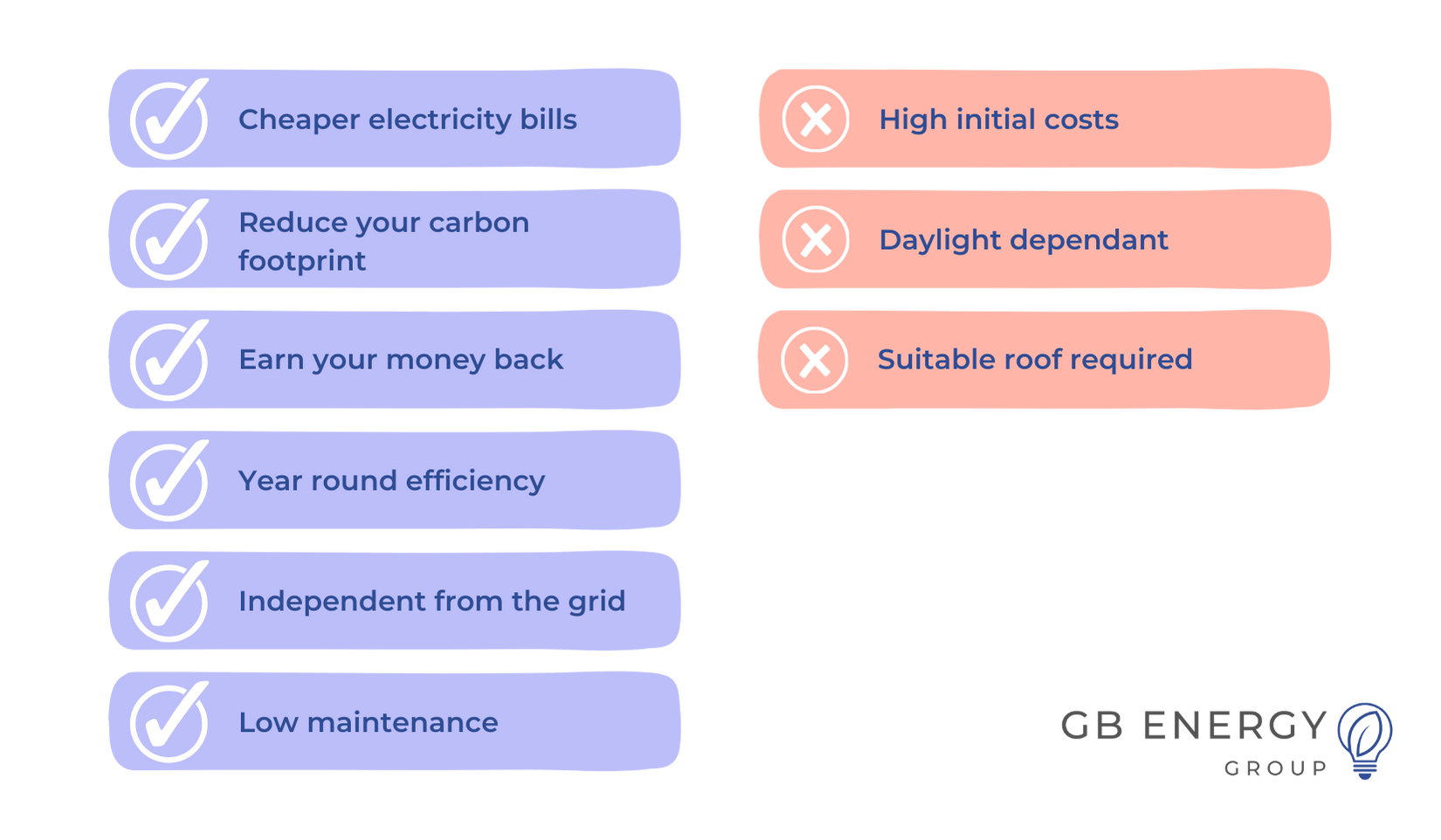
Solar panels generate cost-free electricity year-round, leading to significant savings on your energy bills.

Earn Money Back: Surplus energy generated by your solar panels can be sold back to the grid, allowing you to earn compensation for each kilowatt-hour (kWh) sold.

Reduce Carbon Footprint: Solar panels offer a sustainable energy solution, reducing reliance on fossil fuels and helping to lower your carbon footprint.

Year-Round Efficiency: Despite the UK's reputation for cloudy weather, modern solar panel technology ensures efficiency even during winter months, maximising energy production year-round.

Low Maintenance: Solar panels require minimal upkeep post-installation, with maintenance limited to routine checks to ensure they remain unobstructed and in good condition.

Independence from the Grid: Solar panels enable households to generate their own electricity, reducing dependence on the grid and providing a degree of energy independence.

Disadvantages of Solar Panels:

High Initial Costs:
The upfront cost of purchasing and installing solar panels can be significant, with additional expenses for installation labor.

Dependence on Sunlight: While solar panels can generate electricity even on cloudy days, their efficiency is highest during periods of direct sunlight, making them less effective at night and in winter.

Suitable roof required: Solar panels require unobstructed south-facing access for optimal performance, limiting placement options based on roof type and orientation.

While solar panels offer a clean and sustainable energy solution, it's important to consider their initial costs and dependence on sunlight for optimal performance. Despite these challenges, solar panels remain a worthwhile investment, providing significant long-term savings on energy bills and contributing to environmental conservation efforts by reducing carbon emissions. With estimates showing substantial CO2 savings over their lifetime, solar panels offer a tangible way for homeowners to make a positive impact on the environment while enjoying financial benefits.

Finding the right installer

When it comes to choosing the right installer for your solar panel installation, there are a few key factors to consider. First and foremost, you want to ensure that you're working with a reputable and trustworthy company that has a proven track record of delivering high-quality installations.

At GB Energy Group, we pride ourselves on being a trusted and reliable partner for all your solar panel needs. With a team of experienced professionals and a commitment to customer satisfaction, we go above and beyond to ensure that every installation is completed to the highest standards.

Here's why you can trust us with your solar panel installation:

Detailed Consultations: We understand that every home is unique, which is why we provide detailed consultations to assess your specific needs and requirements. Our experts will work closely with you to design a custom solution tailored to your home and energy goals.

Transparent Quotes: We believe in transparency every step of the way. That's why we provide detailed quotes upfront, so you know exactly what to expect from the outset. No hidden fees or surprises – just straightforward pricing you can trust.

Professional Installation: Our team of skilled technicians are experts in their field, ensuring that your solar panel installation is carried out efficiently and with the utmost care. We take pride in our workmanship and strive for excellence in every project we undertake.

Customer Satisfaction: Your satisfaction is our top priority. We value open communication and will keep you informed throughout the installation process. From start to finish, we're here to address any questions or concerns you may have, ensuring a smooth and hassle-free experience.

5-Star Reviews: Don't just take our word for it – hear what our satisfied customers have to say! With a track record of 5-star reviews and positive feedback, you can trust that you're in good hands with GB Energy Group.

When you choose GB Energy Group for your solar panel installation, you can rest easy knowing that you're working with a company you can trust. Contact us today to learn more and schedule your consultation. Let us help you harness the power of solar energy and take control of your energy future.
Solax app on a mobile phone showing data from solar panels in a graph

See your savings in real time

We'll provide you with access to a smartphone app to check up on your new solar system. Monitor how much energy you're producing, what you're using and how much you're exporting to the grid.
Get a free quote

Start saving today!

Get a free quote

Find out more about solar panels

Read our informative articles about all things solar!

Get Started
...